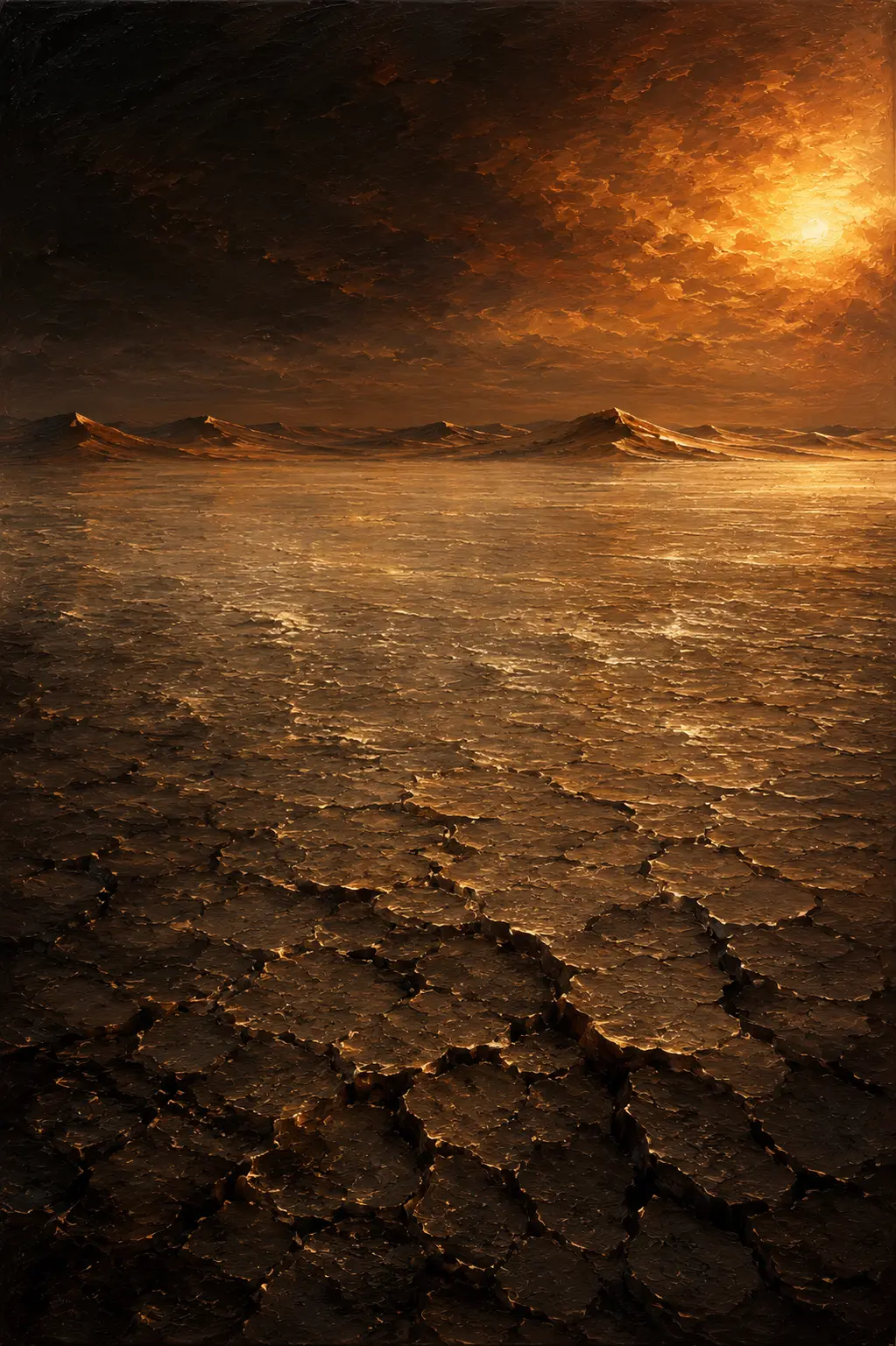
Pax stands at the northwestern edge of the Fury Desert. The country on three sides of it is the country no Paxic army has crossed under arms in a thousand years of war. The Fury is the second-largest single country on the continent, behind the Forests of the Shira, and the largest landform that bears no road. It runs from the Savannah margins eastward to where the White Mountains rise from the inland salt-flats. Its northern interior is unmapped, and the tribes who live within it will not pass a certain line.
The name is Paxic, derived from the great wind that rises out of the country in late summer, carrying sand and dust and a salt that is not of the sea. In years past the wind reached the northern parts of Byercet. In recent years it has not come so far.
The interior is hot beyond what the southern Savannahs prepare a man for. Men of that region in summer dress have not survived the desert nights. The light from noon to evening crosses from white through copper to a brief gold that does not last.
The Peoples Who Dwell There
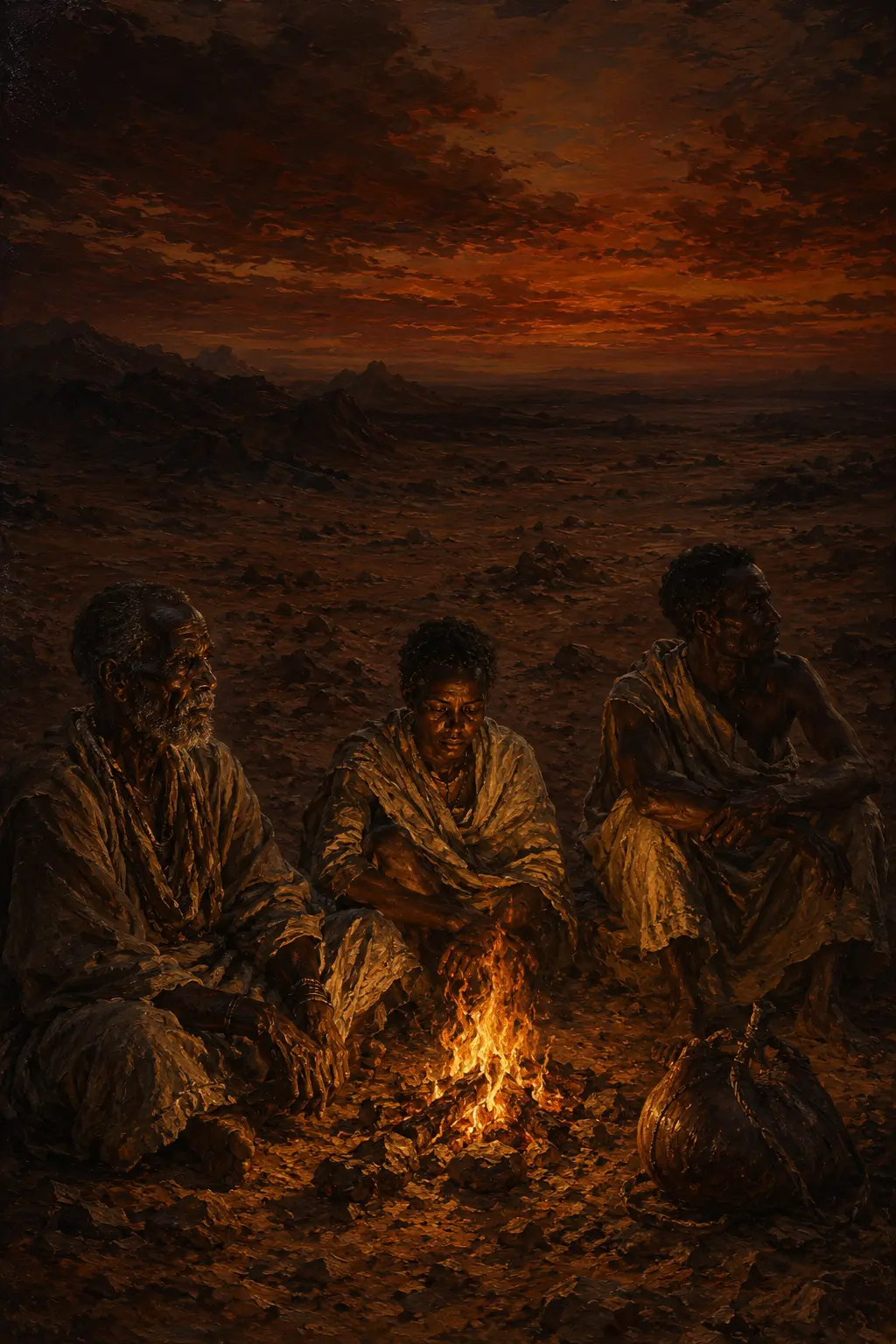
The peoples of the desert do not call themselves by any single name. They are tribes, perhaps a dozen of distinct lineage and tongue. Two are mentioned more than the others. The Adoma are the deeper-interior people, older than any record can produce, and their traditions are the oldest in the desert, though the Adoma are not generous with them. The Taseth are westernmost, and it is the Taseth one is likeliest to meet at the shantytowns when the seasonal migrations come west each year. Some of the Taseth I have met at Dondotha could, but for their dress, have been taken for Dondothan.
They survive by knowing the country. There are springs in the deep desert that appear on no map, and grazing in the broken places, and salt the tribes have harvested for longer than Pax has stood. The Taseth descend in part from people who left Pax in its early generations — not as exiles, but as people for whom the new kingdom turned out to be no kind of home. They walked east. The Adoma absorbed them. Their descendants are part of the desert now.
The Half-Men
The half-men are the chief reason no army has crossed the desert.
A half-man most often appears as a sandhawk — the largest bird the desert produces, common enough that no traveller would think to mark it. They wheel high. They circle a camp at distance through the long part of the day, and a man from the kingdoms watches them and thinks nothing of birds. It is at night that what they are becomes plain. They drop in silence, and a man asleep at the edge of a camp is gone before he knows he has woken. They take adults. They carry them away. What the half-men do with what they take, the tribes know. It is not a knowledge that improves on telling.
Of those killed, the change comes after death. The wings retract. The beak folds back into a face. What lies on the ground when the change is finished is a man, or most of one, and the eyes do not close. The Adoma say there are forms still that are seen only in the deepest desert and are not spoken of away from those places. I do not press them for more.
They are not invulnerable. The tribes kill them with arrows and short spears when they can be brought to ground. The half-men can be fought. They simply cannot be cleared.
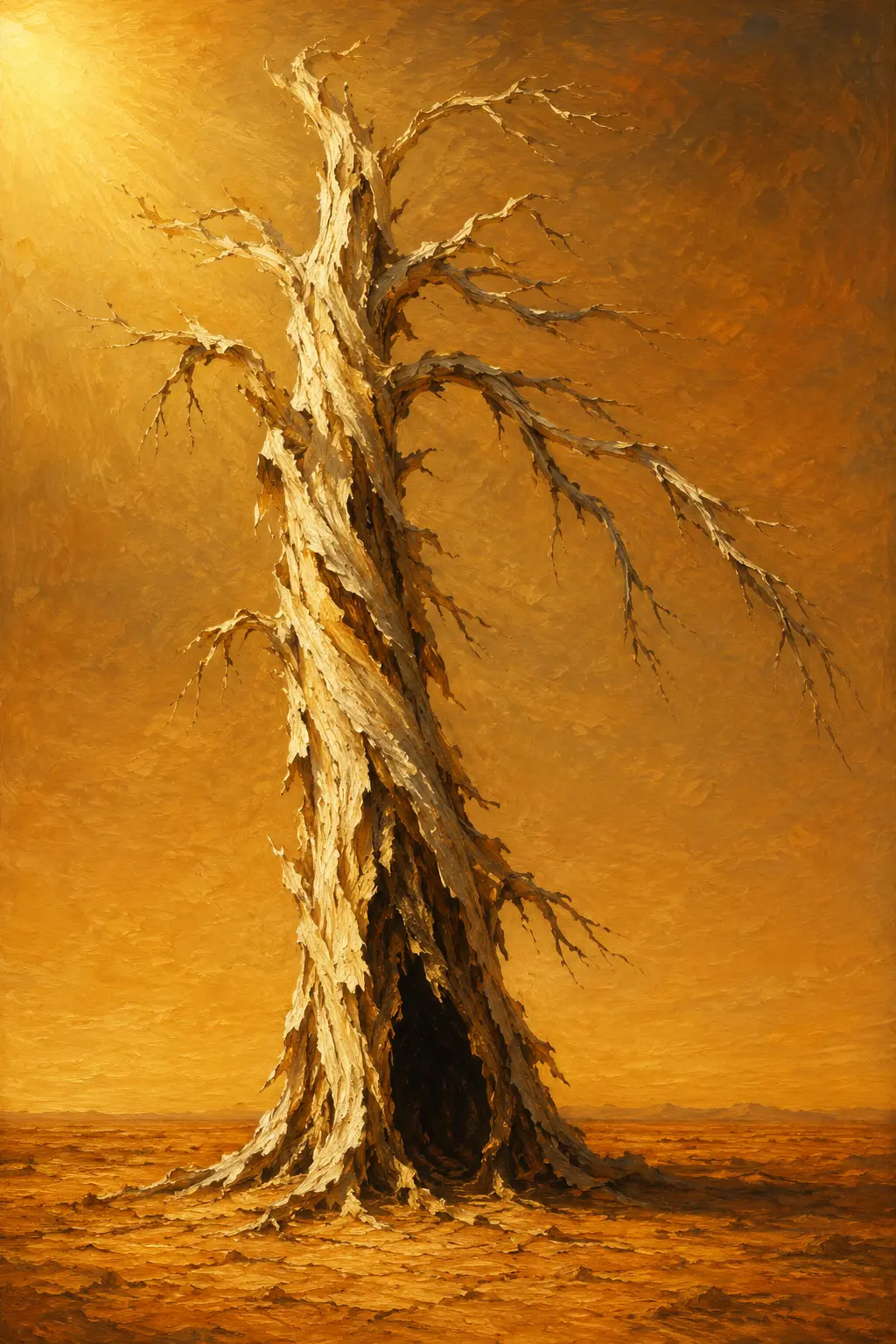
They nest in trees the tribes call the iggol — tall, pale-barked and standing in solemn isolation near the hidden springs, hollow at the trunk, the hollow going down further than the tree goes up. From outside the iggol appear dead. The tribes will not camp within sight of one.
How long the half-men have been in the desert is not in any record. The tribes’ answer is the answer they give to most such questions: they have always been here. Pax sent companies. The companies did not return. Pax stopped sending companies.
I am a man of Byercet and have inherited the jokes of my people about the Paxic and the country east of their gates. I record what they are worth, which is sometimes very little. The half-men are older than Pax. No kingdom would have done better.
The High Country
The northernmost reaches of the Fury Desert are unmapped. The tribes will not go past the line the Adoma call by a name that translates approximately as the high country and which the Taseth do not name at all but speak around. Beyond that line is the country no map describes.
The sailors of the Turtle, passing the northern coast where the White Mountains come down to the sea, have for some generations brought back reports of figures glimpsed at this margin. Tall figures. Too tall. Seen at dawn in the haze, gone when the air clears. Smoke from fires no human party would have set. The accounts agree on what the men did not see: faces, weapons, clear features. The consistency of legend, not of testimony. But consistency of some kind.
The tribes do not call the figures giants. They say only that the high country is not entered, and that whatever lives at the furthest edge has lived there as long as the half-men nearer to hand.
Most of what I have set down has reached me through Dondotha — through the market quarter, and through the merchant families who go slowly between the desert and the kingdoms. The most recent of these reached me by letter last spring; addressed to Korso, lately of Maak. An old courtesy, more habit than knowledge of my circumstance.
In recent decades the channel has narrowed. The seasonal migrations are smaller; what news escapes the desert speaks of tribes turning against one another, fights over water and over older grievances whose origins no one now remembers. The desert has gone quieter, as much of the world has gone quieter in the past several years. I am no longer certain that any of these silences are accidental.